Diesel and no-start service
Instruments before opinions: codes, cranking, fuel, and charging tested at the truck, verdicts explained like a neighbor would.
Austin freight fights two wars at once: I-35, which has been under construction since anyone can remember, and a growth curve that adds trucks to it monthly. When equipment fails in that squeeze, or out on the 130 bypass, or at one of the hundred job sites reshaping this skyline, Austin RPM Truck Repair drives the fix to it. The truck keeps its spot. The schedule keeps its shape.
Diesel work, air and brake systems, trailer repair, tires, electrical, and standing fleet care, quoted with Texas honesty about Texas traffic.
Instruments before opinions: codes, cranking, fuel, and charging tested at the truck, verdicts explained like a neighbor would.
Corridor stop-and-go is a brake diet. We trace the leaks, renew the hardware, and hand back stroke that passes inspection.
Light runs, plugs, air plumbing, doors, legs, and the securement gear job sites inspect hardest.
The Central Texas specialty from May through October, tested and repaired before the heat converts a hose into an engine.
Swaps and repairs on site with summer margins in the math, duals matched, torque checked.
Calendar maintenance timed to the heat, the rare ice, and your actual routes.
The build-out runs on dump rigs, mixers, and material haulers that work brutal duty cycles on unforgiving schedules, and we service them at yards and permitted sites both. Distribution fleets get calendar maintenance with unit records, and the growing tech-freight traffic gets the same discipline. Independents hauling into this boom get treated like the backbone they are.
Every job ends in something dispatch can act on: released, released-with-conditions, or a documented handoff to a bay.
I-35 is the spine and the problem: the through-freight, the construction zones, and the incidents that turn ten miles into ninety minutes. SH-130 catches the smart through-traffic, 183 and 290 move the regional load, and MoPac does what MoPac does. Around them: the manufacturing corridors toward Round Rock and Kyle, the southeast distribution parks, and the job sites that make this metro one large construction project with a music scene.
We plan repairs the way locals plan errands: around the corridor's moods, with the bypass in mind, and with zero faith in optimistic drive times.
Describe the breakdown, pin the location, name the cargo, and say whether it can creep. Back comes a working diagnosis, a plain answer on lot-versus-bay, and a window quoted against the corridor's current temper. Send a dash photo and the diagnosis usually sharpens before we roll.
Half the year the heat file rides along: gauges, coolant history, and how long the truck sat in the sun. Central Texas summer is a mechanical force and it gets a seat at every triage.
Realistic is the right word. If your spot is safe we work it, and if it is not, the first move is getting you somewhere survivable. Windows get quoted against the corridor's actual mood, and the bypass exists for a reason we will happily explain.
Where the site permits vendors and the ground carries our weight, yes. Dump trucks, mixer chassis, haul rigs, and their trailers make up a large share of the week.
Stop. Heat converts small failures into large ones faster here than almost anywhere, and a shaded parking lot costs nothing compared to a cooked head. Call with the reading and we will give you the honest next step.
The corridor south is standard territory, quoted with real drive times. Round Rock and Georgetown get the same treatment north.
Priced before we roll, folded into the work when we do it, settled at the truck. When the phone diagnosis already says bay, you keep your money and the opinion both.
The boom does not keep office hours and the corridor is honestly nicer at 2 a.m. Same triage, any hour.
That is the smartest money a boom-market fleet spends. Yard rotations between pours, unit records, and the brake-and-cooling attention this duty cycle demands. One call builds the calendar.
The freight lots and cargo approaches, yes, with air-freight timing treated as the hard deadline it is.
From the cab and a walk-around:
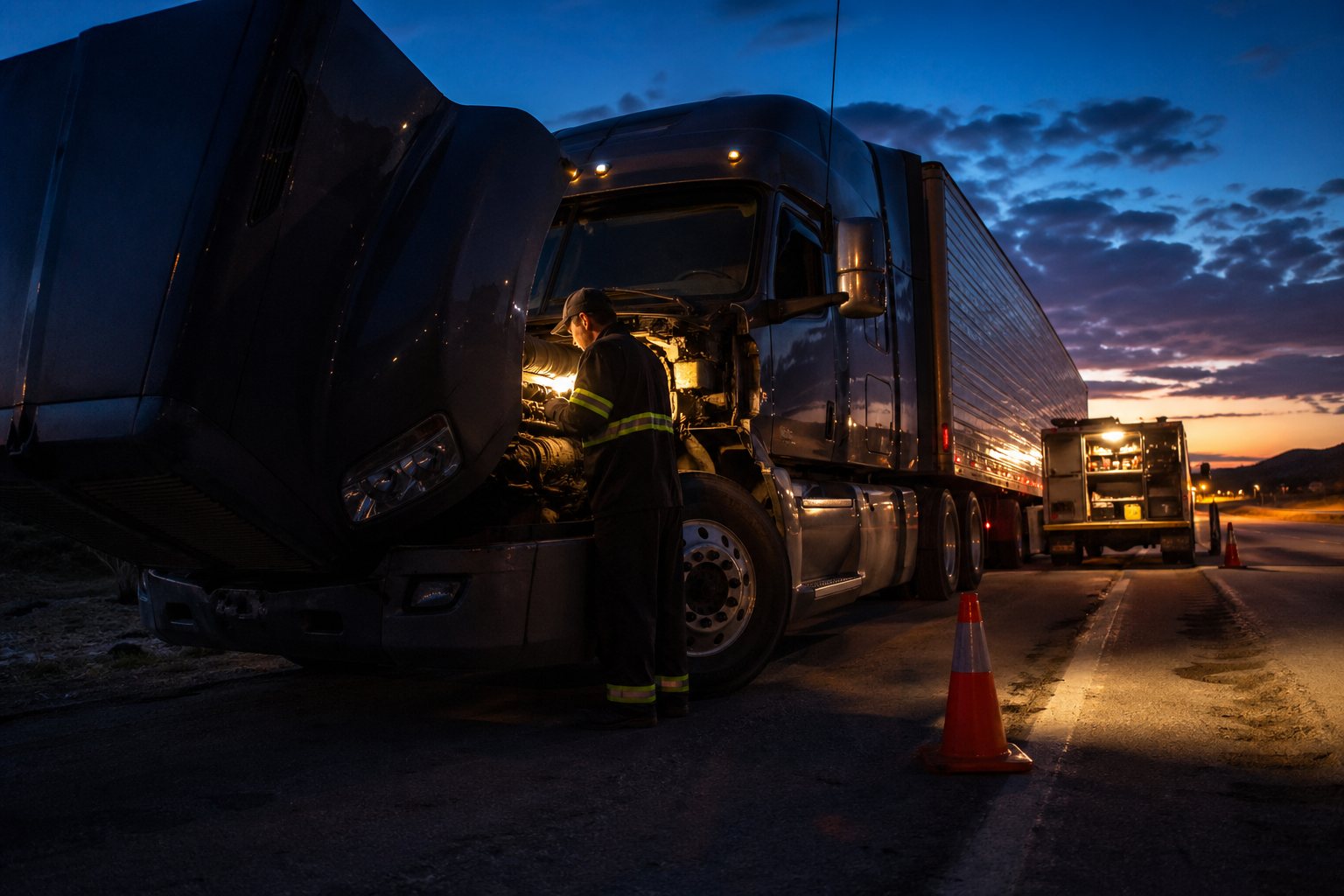
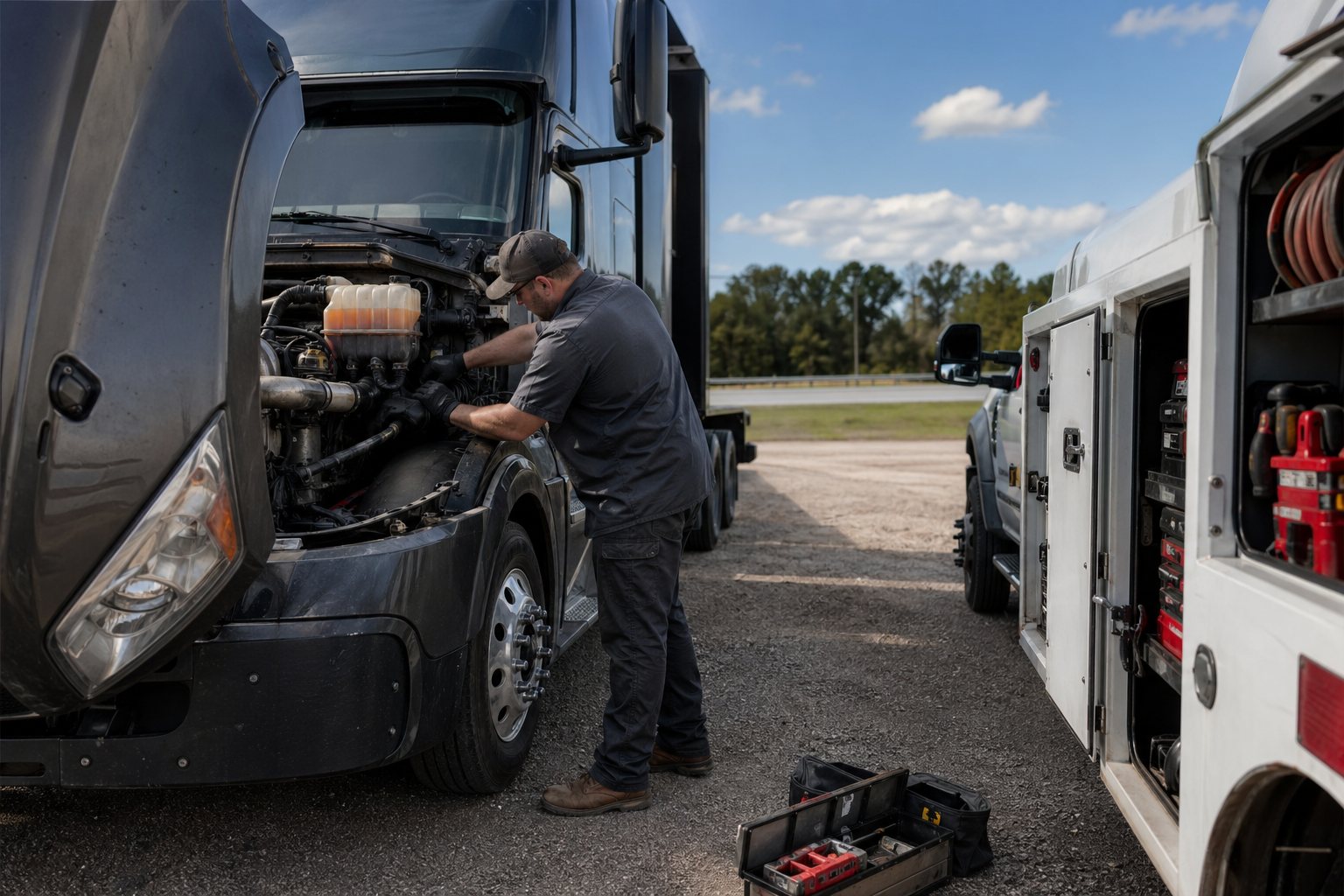
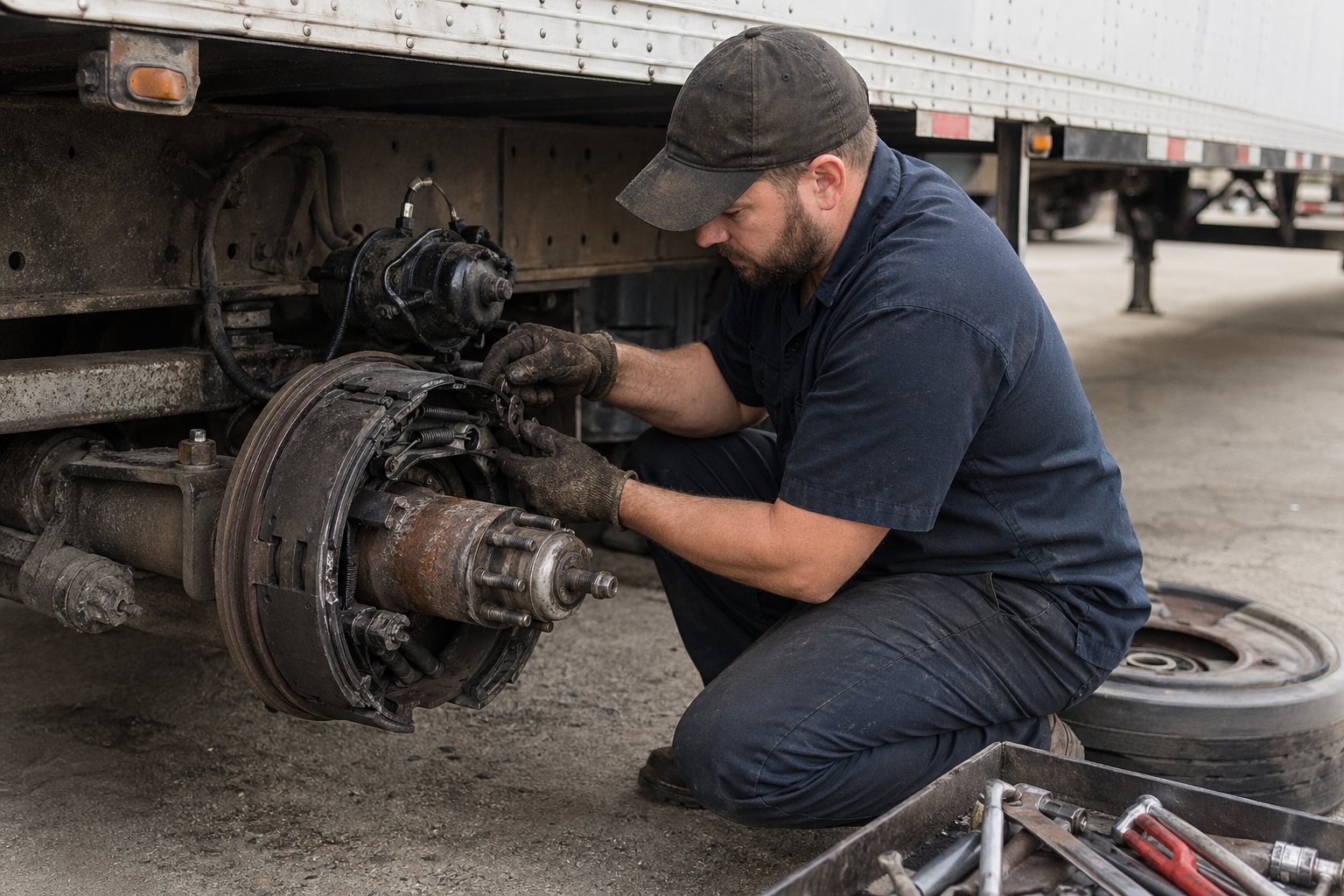
Growth freight is hard freight: construction rigs run loaded on torn-up roads, delivery fleets stretch routes faster than maintenance calendars adjust, and everything idles in corridor traffic that cooks cooling systems by June. Our most common serious calls are heat casualties and brake wear, which is exactly what a boomtown's duty cycle predicts, and exactly what our stock is built around.
The other boom signature is debris: torn-up lanes shed fasteners and scrap that tires collect faithfully, and our patch-and-swap volume tracks the construction map almost to the block. Fleets running site-adjacent routes get tire sweeps in their rotations, because the roads here bill by the sidewall.
The occasional ice event deserves its paragraph: every few winters Central Texas glazes over, the city stops, and the no-start wave arrives with the thaw. Fleets that take the November battery-and-air check ride those weeks out. The rest meet us in interesting circumstances.
The event calendar leaves its fingerprints too: festival weeks and race weekends reroute freight and pack the corridors, and repair windows quoted during them respect the crowd map. This city parties professionally, and its working trucks learn to schedule around the encore.
The growth headlines belong to the big logos, but a surprising share of this metro's freight still moves behind independent operators betting their own iron. Those trucks get our most careful math, because a wrong verdict costs a family, not a line item. Diagnosis first, plain options second, and the repair that actually serves the truck's owner, even when it is the smaller ticket.
Every through-driver eventually faces the choice: gut out I-35 or pay the bypass. When your truck is already limping, that decision has mechanical stakes, and we will help you make it on the phone. Some faults tolerate the extra bypass miles happily and buy you an easier place to meet us. Others need the closest safe stop regardless of road. Which one you have is a diagnosis, not a guess, and it is part of the free conversation.
Austin's event economy loads in and loads out constantly, and the box trucks and production rigs doing it run on schedules with curtain times attached. Show-freight calls get clock-first handling and the venue-area traffic honesty that this town requires. The show loads out on time, or at least the trucks stop being the reason it might not.
A mixer with a load aboard is the most urgent call in construction freight: the product is curing whether the truck moves or not. Those calls jump the queue, get the fastest safe response we can assemble, and if the honest answer is a transfer plan instead of a repair, you hear it in the first minutes while the load still has options. Concrete waits for nobody, and our triage knows it.
Austin added freight faster than it added anywhere to put a broken truck, which makes mobile repair less a convenience here than a piece of missing infrastructure. We fill that gap one yard, one job site, and one corridor shoulder at a time, with verdicts that hold and windows that mean something. The boom can keep booming. Somebody just has to keep the trucks alive underneath it.
Exit or site, failure, cargo, clock. Verdict, window, wheels moving. The rest is wrenches and Texas weather.